
We are living in an era of “miracle” software. We have LLMs that can summarize a thousand-page document in seconds and generative tools that can create photorealistic art from a prompt. Yet, in the middle of this technical renaissance, the fundamentals are rotting.
The “New Outlook” is a perfect example of this industry-wide malaise. It is sleek. It is modern. It is also currently incapable of importing a standard .ics calendar file (I still have to manually add my United flight details). If you try to copy and paste text between core applications, you are often met with a formatting disaster that requires a manual cleanup.
We have reached a point where we have to “hack” our own operating systems just to get them to behave. I use PowerToys just to have a “paste as plain text” function. I have to resort to third-party utilities like Rainmeter simply to see two different time zones on a Windows taskbar.
How did we get here? Why is PowerPoint still using the same clunky “SmartArt” and line-art logic it had over a decade ago while the world around it has moved to 4K?
The problem is cultural. In the boardroom, it isn’t “sexy” to announce that your latest release finally fixed the clipboard formatting or made the search function actually find the files it’s looking at. Executives want to talk about AI integration, “CoPilot” and revolutionary new features that look great in a keynote but offer zero friction-reduction in the daily grind.

When you prioritize the shiny over the solid, you alienate your users. You stop listening to the person who just wants to send an email with a consistent font and start chasing a hypothetical user who wants an AI to write their emails for them.
This obsession with “more” is also a massive security liability. Every new feature opens a thousand new logic paths. No QA team or automated suite can reliably test every possible combination of these paths.
Security holes rarely happen because a developer was lazy or malicious. They happen because no one could imagine a specific combination of “cool new features” being used in a way that leaves the back door wide open. In the rush to deliver something new, no one stopped to ask if they should.
If you are leading a software team today, the most radical thing you can do is focus on the “low-hanging fruit” that bogs down your users every single day.
- Audit the core loop
What are the five things your users do every single hour? If any of those things have “friction” even small, three-second annoyances fix them before you touch a single line of AI code. - Reduce the feature list
Strength comes from subtraction. If a feature is 80% broken and rarely used, kill it. Use that reclaimed energy to make the remaining 20% bulletproof. - Prioritize Deterministic Results
AI is probabilistic; it might get the answer right. Your search bar and your font rendering should be deterministic. They should work every single time, without fail.
We don’t need more “bells and whistles.” We need software that does exactly what it says on the tin. Reliability is not a “maintenance task” it is the most important feature you can ever ship.
Yes I am looking at your Microsoft as the biggest culprit
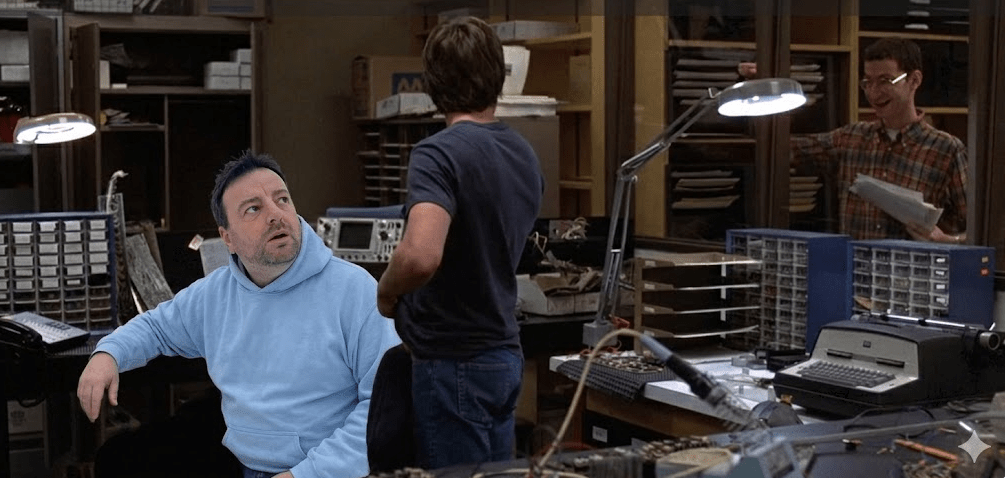
AI Disclaimer: Gemini Nano Banana Pro was used to generate the photos – inspired by the ’81 Raiders of the Lost Ark movie with me as Indy.




![[Review] PostgreSQL Mistakes and How to Avoid Them](https://alan.is/wp-content/uploads/2026/02/mycousinvinny-small.png?w=643)
 Alan Williamson