
AI dominates the headlines, with many new phrases popping up. People now use the term SaaSpocalypse to describe the potential demise of SaaS platforms as AI builds in-house replacements.
Jeffery Favuzza, a trader, coined the phrase, after Anthropic announced their Cowork product in Feb 2026. This sent stocks of SaaS companies down, as the market wrestled with their perceived moat being shrunk, if not eliminated if you were to believe some. AI was going to allow companies to build alternatives for a fraction of the cost. Continuing the narrative, in the recent earnings call, Ellison of Oracle, down played this threat noting how they were immune.
The situation is more complex than suggesting Atlassian, HubSpot, ServiceNow, and Salesforce are in immediate trouble.
“We have these coding tools now that allow us to build a comprehensive set of software, agent-based software, to implement to automate a complete ecosystem like healthcare or financial services,” Ellison said. “That’s what we’re doing at Oracle. That’s why we think we’re a disruptor. That’s why we think the Saaspocalypse applies to others but not to us.”
Larry Ellison, Oracle Chairman March 2026
There is a naivety in how software actually is deployed for those buying into this (though part of me wonders if there is some market manipulation going on to depress stock prices to score some deals).
So the story that we are meant to accept is instead of paying for expensive per-seat licenses, companies are going to simply vibe-engineer a replacement.
Mmm where have I heard this story before? Oh yes, about 25 years ago, when open source first burst onto the main stage, and everything was going to be free and open. No more buying expensive Oracle/Microsoft database licenses (since MySQL/Postgres were free), no more buying Microsoft Windows (Linux is free), no more Microsoft Office (LibreOffice). I could go on. Yet, each of these examples I cite, are stronger than ever. Why?
There is no doubt open source has made serious inroads, if not in most cases, a stronger/better alternative than their commercial counterparts. Paid versions come with more than just source code. They come with compliance (HIPAA/PCI), security updates, support systems, accountability, scalability.
It is fair that most SaaS offerings have feature bloat to justify their increasing per-seat cost. Is the typical client using any where near the full range? I would wager not, but they are still paying for it. SalesForce and Atlassian are two examples of a huge amount of bloat for what amounts to a CRM system (somewhere to store customer notes) or a ticket system to track tasks (a glorified team to-do list). Anywhere near scale, these get expensive.
Very conceivable for a small team inside a large company to vibe out their version of SalesForce, with just the features they need, toss it onto a handful of servers, and boom, that huge license cost now saved. Will it work? – absolutely, until it doesn’t.
We now need to keep this updated, with security patches, since this is a custom build, with code that no human probably bothered to look at, it may have some holes that would allow it to be exploited. Okay, we can handle that, let’s just throw up a new agent that is continually checking.
Integration. We’ll probably want to hook into other systems, have an API to talk with it, or to export data. Maybe do some reporting against the data. No standardized API, so we are going to have to custom vibe out our integrations, and since it’s all custom protocols, most likely going to need to maintain this one too on a continual basis.
We are going to need to host this, at least to be always up and be performant for employees. That may be a lot of effort as we figure out our backups (which again, is going to be a custom build as we figure out the export/import and data continuity plans).

Starting to become a bit of a hassle now. Companies will need to create small internal software teams to support all of this, which may be just watching over the AI agents continually do their thing, but someone needs to mind the output. As new features are added, which they will be, as they won’t have anyone saying no, or taking a proper product analysis, the custom platform will start to bloat up, maybe start slowing down, creating new problems, as features were added adhoc with no real thought.
Oh, least us not forget about training. There will be no prior experience to draw upon, everyone is on their own as they fire up the browser to the in-house vibed “BuyForce”.
This is taking away the focus from the core business.
There is no doubt, some will go down this path, some will succeed, some will crash and burn. Regulated industries will not take the chance. Healthcare industries will not risk the security headline. Fortune 500s will want to remain focused on their core business and have software that just works. Smaller organizations will be tempted to down this path and will most likely succeed. The big public SaaS companies aren’t making their money on the 1-5 license people, those are rounding annoyances.
The impact of AI on SaaS that will lead to “SaaSpocalypse” is overblown and repeated by those that don’t really understand what they are talking about. AI is changing the SaaS landscape for sure. SaaS providers need to wake up to this, just like cloud computing was a wake-up call to server vendors, and open source was a wake up to commercial shrink wrap software.
SaaS needs to trim down their bloat and welcome AI over their moat into their castle. Get back to your core offering and let go of all the bells and whistles, because this is the part AI is going to replace and most likely do a better job. Example: Jira – drop your Rovo AI agent – and instead make your API/MCP Server much easier that my desktop AI agent can get in there and do what I need.
Give me the per-seat license where I don’t have your AI – because I want to bring my own.
SaaS public offerings are more than just software, they are large vaults of company data, serving as the system-of-truth for many other business processes and systems. AI can make these vaults even more valuable, as we build more agents in and around utilizing these.
That is where I think most missed the point of Anthropic’s Cowork. It wasn’t there to replace SalesForce, but to make it a whole lot easier to interface with, without going through the web browser. I for one, have not used the Jira UX to comment on tickets for a long time – my AI agent has been doing that for me, as I simply typed out “add this comment to the ticket assigned to me on XYZ”.
AI has changed the way we work with our tools; our tools need to get out of their own way and let us.
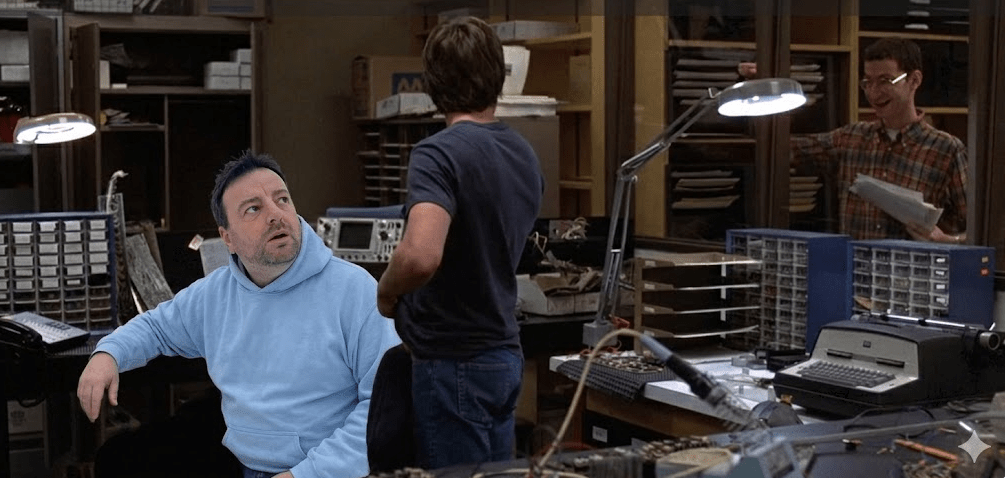
AI Disclaimer: Gemini Nano Banana Pro was used to generate the photo – from the ’79 Apocalypse movie


![[Review] PostgreSQL Mistakes and How to Avoid Them](https://alan.is/wp-content/uploads/2026/02/mycousinvinny-small.png?w=643)

 Alan Williamson