
Technical debt is no longer just a line item on a balance sheet. It has become an active, accelerating security crisis.
For decades, we operated under a collective, unspoken agreement. We built systems that were not necessarily secure; they were just difficult to audit. We relied on the concept of “security through obscurity.” We assumed that as long as our vulnerabilities remained buried deep in legacy code or hidden behind complex, undocumented workflows, they were effectively non-existent.
We were not being dishonest. We were simply being pragmatic.
In my years running engineering teams and conducting diligence engagements for private equity, I have seen this pattern repeat endlessly. When we perform a deep dive on a target company, we almost always find the same rot. There are unpatched libraries from 2014. There are “temporary” hardcoded credentials that have been in production for three years. There are critical systems still running on protocols that should have been retired during the Bush administration.
And yet, these flaws remain hidden. Why? Because patching is a nightmare.
Patching requires significant downtime and rigorous testing. If you touch a legacy system that has not been updated in half a decade, there is a legitimate chance it simply will not come back up. The risk of breaking the business often outweighs the perceived risk of the vulnerability itself. Furthermore, there is no real glory in a successful patch. No one throws a party because the system stayed upright after an update. You get no recognition for being right, but you are heavily blamed if you are wrong.
So, we kick the can. We document the debt, acknowledge the risk, and push it to the next quarter. We treated technical debt like a manageable interest payment.
AI has just changed that entire calculation.
The “Black October” PHP crisis proved this is not merely theoretical; it is our new reality. When the php2shell exploits (CVE-2026-109618) surfaced, the industry did not have time for a scheduled maintenance window. It was a chaotic scramble. Even heavyweights like Cloudflare were forced into an emergency cycle, deploying mitigations and pushing fixes in real-time to stay ahead of the exploit wave. This was not a controlled roll-out; it was survival mode.
The most concerning part is not just the scale; it is the catalyst. As researchers at Wiz pointed out, these flaws have existed for years, but frontier AI models changed the fundamental math. They reduced the barrier to entry so significantly that they turned longstanding, complex vulnerabilities into repeatable, automated exploits. The “obscurity” we relied on did not just fail; it was actively dismantled by the very technology we were using to build the future.
This is exactly what Jason Clinton, Anthropic’s Deputy CISO, warned about this week. Looking at the chaos of the PHP meltdown, his message was blunt: “As bad as things have gotten in the past four days, they are going to get a lot worse before they get better.“
He is not talking about a temporary spike. He is warning of a “vulnerability tsunami” that will arrive before we have the capacity to patch our critical infrastructure. His advice to leaders was not to buy more AI defenses; it was to go to your boards and demand help for the basics. We need to fix the foundation before the flood arrives.
The era of “later” is over. AI does not care about your sprint velocity or your quarterly roadmap. It does not get tired, and it does not have a bias toward stability. If an LLM-driven agent can crawl a codebase, it acts like water. Water finds every crack, no matter how small or how deep.
We used to assume that exploiting a complex, undocumented vulnerability required a level of human effort and specialized knowledge that made most “small” holes not worth the trouble. We banked on human laziness. We assumed attackers would not have the time or the motivation to hunt for that one specific, obscure flaw in your PHP implementation.
That assumption was our greatest vulnerability.
AI has commoditized the hunt. An automated agent can now perform the work of a highly skilled security researcher in a fraction of the time and at a fraction of the cost. The “obscurity” we relied on has evaporated. The holes are being surfaced not by malicious intent alone, but by the sheer, indifferent efficiency of the technology itself.
For leadership, this changes everything.
You can no longer treat technical debt as a secondary concern to feature delivery. You cannot “plan” to fix your security posture in 2027. The tools required to dismantle your infrastructure are already here, and they are getting faster every month.
If you are still relying on the hope that nobody will bother to look under your rug, you are not managing risk. You are just gambling with a deck that is being shuffled by an algorithm.
The cracks are there. The water is flowing. It is time to start patching.
If you need help navigating this, reach out to us at ThinkLikeaCTO.ai, where we are helping organizations think through the complex issues facing the CTO in the AI era.
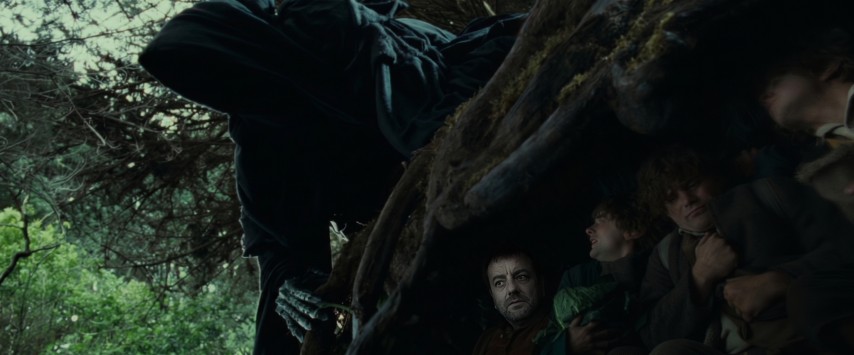
P.S. Marge helped review the post. Gemini produced the “Lord of the Rings (2001)” image and the little video of the AI overlords seeking out all those bugs!






Leave a Reply