
For a few weeks now my feed has been popping with headlines detailing settlements. Meta. Google. TikTok. Alibaba. Every time I opened anything, another nine or ten figure number went past. It started to feel like a pattern rather than a run of coincidences, so I went and pulled the actual list to check whether I was right or just doom scrolling.
My hunch was right; this was more than a trickle. Fifteen major matters between July 1 and today (August 27th 2026). More than $25 billion in total exposure. That is under two months. TWENTY FIVE BILLON in fines – What The Actual Fuck!
Here is what happened, and then the part that actually interests me, which is that none of it seems to have hurt.
The Big Fines
- Child safety and privacy.
- Meta settled with 47 states plus D.C., Puerto Rico, American Samoa, and the Northern Mariana Islands for at least $12.1 billion and up to $17.1 billion. The trial had been running for eight days.
- TikTok and ByteDance paid the DOJ $400 million over children’s privacy, $300 million immediately and $100 million more once an old consent decree gets vacated.
- Antitrust and app stores.
- The European Commission fined Google €890 million under the Digital Markets Act, split between self-preferencing in Search and blocking developers from steering users to cheaper payment options.
- A US federal judge signed off on Google’s $700 million Play Store settlement with all 50 states.
- The Court of Justice of the EU dismissed Google’s final appeal on the €4.125 billion Android fine, making it permanent after eight years of litigation.
- Marketplaces.
- The Commission hit AliExpress with €550 million, the largest fine yet under the Digital Services Act, over unsafe and counterfeit products.
- Three weeks earlier the DOJ took $600 million off Alibaba and its US payment processor over illegal pharmaceutical sales.
- AI copyright.
- Anthropic’s $1.5 billion settlement with authors got final approval. About $3,000 a book across roughly half a million titles. Largest copyright recovery in US history.
There is small chump change fines too. Amazon paid $2.25 million over identity theft records and Oracle’s $115 million privacy settlement finally cleared appeals and starts paying out in September.
Nobody looks worried
This is the bit that got my attention.
Alphabet lost its last appeal on a €4.1 billion fine. The stock moved about 1% premarket. That is a permanent, unappealable penalty on one of the largest antitrust cases the EU has ever brought, and the market shrugged.
Meta’s settlement pays out over ten years. Call it $1.2 to $1.7 billion a year against annual revenue north of $200 billion. Meta denied the allegations. Before trial it had argued that the states’ own damages framework could theoretically produce penalties as high as $1.4 trillion, and the states themselves were signaling around $200 billion as a realistic target. So the number they landed on is a negotiated outcome, not a punishment.
AliExpress could have been fined nearly $9 billion. The DSA allows up to 6% of global turnover, and Alibaba Group’s revenue was $148 billion. It got €550 million, with the Commission explicitly citing the novelty of the legislation as a mitigating factor. AliExpress still called it disproportionate and said it will appeal.
Alibaba described its $600 million DOJ resolution as a mutually satisfactory outcome. It had admitted to roughly 80,000 non-compliant transactions worth over $200 million in merchandise, spanning nine years.
Google denied wrongdoing on Play. Oracle denied wrongdoing. Adobe denied wrongdoing in March. Nobody admits anything, everybody pays, everybody carries on.
Google’s cumulative EU antitrust liability has now passed €10 billion since 2017. The business model is unchanged.

The math on delay
The Android case makes the clearest argument.
The Commission opened its investigation in April 2015. It issued the fine in July 2018. Google appealed, got it trimmed from €4.34 billion to €4.125 billion in 2022, appealed again, and lost for good on July 2 this year.
Eleven years from investigation to final judgment. Eight from the fine. Across that period Google ran Android on the terms the Commission objected to, and Android earned it considerably more than €4.1 billion.
I am not saying that is a scandal. It is a rational finance decision. If the penalty is fixed and the delay is free, you delay. Any CFO would make the same call. But it does tell you what the fine actually is in practice, which is a cost of capital problem rather than a deterrent.
The one thing that is not just money
I want to be careful here, because there is a version of this post that ends with everything is fine and everyone is cynical, and that would be wrong. Something did change in these deals, and it is not the numbers.
Meta agreed to build things. A combined two hour daily limit for child users across Instagram and Facebook. Mandatory pauses after 15 minutes of continuous use, and again at 60 and 90 minutes. Access blocked between midnight and 6 a.m. Push notifications suppressed on weekdays during school hours. Age assurance. Restrictions on beauty filters and visible like counts. An independent auditor checking that all of it works.
Google has 60 days from the DMA decision to change how Search ranks its own services and how Play handles steering. If it misses, it pays up to 5% of Alphabet’s average daily global turnover for every day it is late. Under a General Court ruling from July, appealing does not pause that clock.
AliExpress has to file a corrective action plan by October 20.
You cannot write a check against any of that. A cash penalty comes off the balance sheet. A mandated session timer comes off engagement, permanently, and shows up in every quarter after that. If you want to know which part of these settlements the companies actually fought over, it was not the money.
So what
The interesting question is not whether the fines are big enough. They are clearly not, and everyone involved knows it. How the hell do you justify $17B in fines, and still get to say there was “no wrongdoing” – I said it before and I will say it again – WHAT THE ACTUAL FUCK!?
Have we, society, become numb to the billion word? There was a time if such a number was mentioned it would have made the mainstream news headlines. Not anymore.
I am wondering if I picked the right field with technology, sure seems that lawyers are being kept busy.
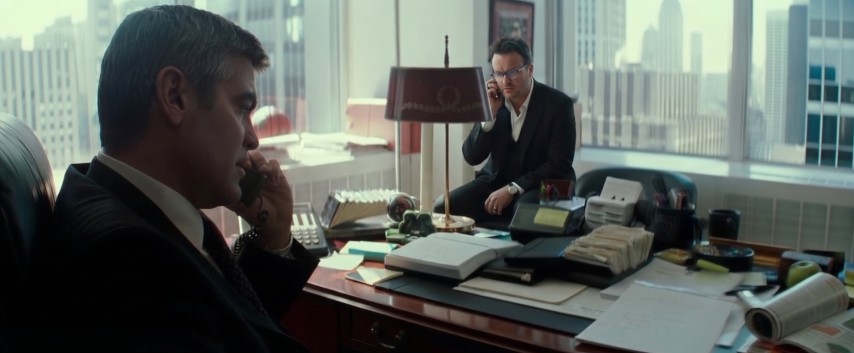
AI Disclaimer: Gemini Nano Banana Pro was used to generate the photo – from the 2007 “Michael Clayton” movie with me listening in on George Clooney’s call. Local LLM Gemma 4 27B was used for research, pulling together all the settlements from my historical inbox newsletter emails.


![[Review] Convoy: The Comprehensive Yet Untold Story](https://i0.wp.com/alan.is/wp-content/uploads/2026/09/2026-09-05_15h22_57-1.png?fit=301%2C142&ssl=1)



![[Review] Convoy: The Comprehensive Yet Untold Story](https://alan.is/wp-content/uploads/2026/09/2026-09-05_15h22_57-1.png)


Leave a Reply